
Deck staining
How to Choose the Right Stain for Your Deck
By C & M Painting · Nashville & Middle Tennessee
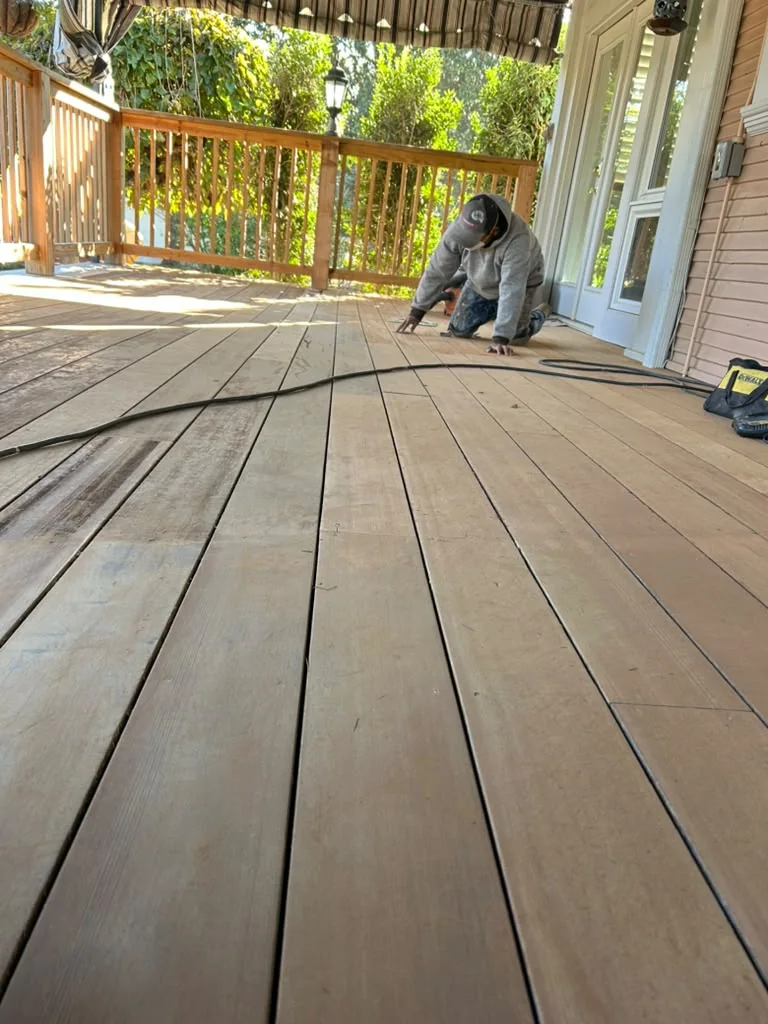
The stain color on the sample board is a starting point. Your deck may have older wood, a previous coating, or areas that have spent years in the sun. All of those can affect the result.
Before picking a color, find out what's already on the boards and decide how much wood grain you want to see. Those two questions will narrow down your options faster than browsing another row of stain cans.
Start with the coating that's already there
If you have the old can, keep it handy. The product name gives you something useful to check against the new stain's instructions. If you don't know what was used, have the surface assessed before committing to a new coating.
A transparent stain won't make an opaque finish disappear. Getting back to a visible wood-grain look may require removing the old coating, and the result depends on the wood underneath. Simply switching between an oil-based and water-based product isn't a reliable plan either; compatibility depends on the actual products and surface preparation.
Choose how much of the wood you want to show
Transparent stains leave much of the wood's appearance visible. That's appealing if you like the grain and the boards are fairly consistent in color. It also means patches, weathering, and differences between old and replacement boards may remain noticeable.
Semi-transparent stain adds more color while still showing grain. Solid stain gives a more opaque appearance, with the wood's texture usually still visible. It can make an uneven-looking deck more uniform, but it won't fix damaged boards.
Check the boards before covering them
Look closely at stair treads, board ends, and spots where water collects. Loose boards, soft wood, and unsafe railings need repair before staining. A darker finish isn't a repair for wood that's failing.
New boards can take stain differently from older ones. If you've replaced part of the deck, test the proposed finish on both areas before assuming they'll match. Use a discreet spot and follow the product's preparation instructions for the test.
Leave time for preparation and drying
Deck stain needs a suitable surface. Dirt, loose coatings, and mildew can interfere with the finish. Depending on what's there, preparation may include cleaning, stripping, or sanding rather than just washing and applying another coat.
After cleaning, allow the wood to dry to the stain manufacturer's requirements. For a Nashville deck, check overnight conditions and the rain forecast as well as the afternoon temperature. Follow the label for moisture limits, application temperatures, and the time needed before rain or foot traffic.
Think about the next coat, too
Ask what maintenance will involve before choosing a stain. Sun exposure, standing water, foot traffic, preparation, and the product itself all affect how it wears. A covered porch and an uncovered staircase may need attention at different times.
Keep the product name and color after the job is done, and check the deck periodically for worn areas or coating failure. Choose a stain approved for deck floors; a product intended only for vertical siding or fences may not suit boards you walk on.